What to Post About Your Book Before It's Published
You know you should be building your audience before your book comes out. You've heard it matters. But every time you actually sit down to post something, the same thought stops you cold:
What am I even talking about? I don't have a book yet.
So you close the app. You tell yourself there's no point starting now, that it would feel fake to market something that doesn't fully exist. You'll figure the marketing out when the book is done.
The problem is that "when the book is done" arrives on launch day. And by then, you're already behind.
The Instinct to Wait Makes Sense. It's Also Costing You.
Waiting doesn't come from laziness. For most pre-published authors it actually comes from a place of integrity. It feels somehow dishonest to talk about a book that isn't finished yet, like you're asking people to care about something you can't fully deliver on yet.
That instinct makes complete sense. And it is the single most expensive mistake a pre-published author can make.
Here is what launch day actually looks like when you wait. You publish your book and announce it to a feed full of people who have no idea who you are. No relationship. No trust. No reason to stop scrolling. Not because your book isn't good. Because you never gave them a reason to pay attention before you needed them to buy. You are introducing yourself to strangers on the exact day you need those strangers to spend money.
Every week that passes without building your audience is a week of potential subscribers, reader relationships, and trust that simply will not exist by launch day. The launch window is finite. You will never have more momentum for your book than in the weeks immediately after it comes out. If you arrive at that window as a stranger, you will spend your entire launch introducing yourself instead of selling to people who were already ready.
The Reframe That Changes Everything
Here is the shift that unlocks this for pre-published authors.
You are not marketing a book that doesn't exist yet. You are showing up for the reader your book is being written for.
Those are completely different things. Marketing a book that doesn't exist requires something finished to point to. Showing up for your ideal reader just requires knowing who they are and what they care about. And you already know that right now, before the manuscript is done.
For fiction authors, your content is not about your book. It's about the emotional world your book lives in. The themes it explores. The feelings it creates. The kind of stories your ideal reader is already searching for and why they love them. You are not selling something that doesn't exist. You are becoming the author your ideal reader recognizes as someone who understands exactly what they are looking for, before your book even exists to be sold.
For nonfiction authors, your content is about the problem your book solves. That problem exists in your ideal reader's life right now, today, before your book is published. They are already struggling with it. They are already searching for answers. Showing up for them today is not premature. It is exactly the right time.
In both cases, you have everything you need to start. The book being unfinished is not the obstacle.
What This Actually Looks Like
One of my clients, I'll call her Rachel, was a debut novelist nine months away from publication. Zero social media presence. Zero email list. No idea where to start.
When I first talked with her about building her audience before the book came out, she hesitated. It felt dishonest to talk about a book that wasn't finished yet, like she was asking people to care about something she couldn't fully deliver on. She'd been telling herself she'd figure out the marketing after the book was done.
What changed her mind was one question: what would launch day actually look like if she waited?
She pictured publishing her book and announcing it to people who had no idea who she was. That image was enough.
So she started nine months early. She worked through her foundation first, identifying her ideal reader, what her book gave that specific person, and what the emotional experience of her novel was going to feel like. That clarity let her create content about her book's world without ever needing a finished product to point to.
She built a lead magnet around one simple idea: what to read while you wait for my book. A curated reading list for readers who loved the kind of story she was writing. Fiction readers loved it. They signed up.
She was not selling anything. She was building a room full of people who wanted to be there when the doors opened.
By launch day, Rachel had 187 email subscribers who had been following her journey for months. A warm social following who knew her voice and trusted her. Real anticipation she hadn't had to manufacture, because the relationship was already there.
She sold 94 copies in her first week. She had expected 10-15.
Same debut novel. Same author. A completely different launch because she didn't wait.
If you want to know which pieces of your own marketing foundation are missing right now, the free Book Marketing Blueprint will show you in about 15 minutes.
The Three Phases Every Author Needs to Know
There are three phases of book marketing. Most authors only know about one of them.
The first is the Attraction Phase. This is where Rachel spent her nine months. You are not selling yet. You are building awareness, relationships, and an email list of readers who are genuinely interested in what is coming. Your only job is to make the right readers aware you exist and give them a reason to follow your journey.
The second is the Promotional Phase. This starts roughly three to four months before launch and runs through the first two weeks after your book comes out. This is where you sell, announce, and drive pre-orders. This phase works because the Attraction Phase happened first. You are selling to a warm audience, not strangers.
The third is the Follow-Up Phase. It starts two weeks post-launch and runs indefinitely. This is actually where most book sales happen, long after the launch window closes. Most authors don't realize this phase even exists because nobody told them that marketing doesn't stop on launch day.
Most authors skip straight to Phase 2 on launch day. They are selling cold, with no list, no warm audience, and no trust built. And then they wonder why the launch didn't perform.
Rachel didn't skip Phase 1. That is the only difference.
What to Actually Post Right Now
Start with your foundation. Who is your ideal reader specifically enough that you could describe them in a paragraph? What does your book give that person? What do they need to hear over and over to trust you enough to follow you, engage with you, and eventually buy?
Once those answers are clear, the content is obvious.
Fiction authors: post about the emotional experience your genre creates, the tropes your readers feel strongly about, the themes at the heart of your story. Post about what makes readers love the kind of book you are writing. Become the author your ideal reader recognizes before you ever ask them to buy.
Nonfiction authors: post about the problem your book solves. Not in a general way. In the specific, lived-in way your ideal reader experiences it every day. Show them you understand their situation better than anyone else does. Build that trust now, so that by the time you have a book to point to, they already believe you are the right person to help them.
Build your lead magnet during this phase. For fiction, a curated reading list, an exclusive short story, or a behind-the-scenes look at your book's world. For nonfiction, a checklist, a short guide, or a worksheet that solves one specific problem your reader is dealing with right now. Something that gives your ideal reader a reason to hand you their email address before you have a book to sell them.
Then email that list. Build the relationship. Show up consistently. So that by launch day you are not introducing yourself to strangers. You are opening doors for people who have been waiting.
The Authors Who Look Back Without Regret
In nearly 20 years of working with authors across every genre and every stage, the pattern is consistent. The authors who have the best launches are not always the ones with the most talent or the best covers. They are the ones who understood that launch day is not the beginning of marketing. It is the payoff of marketing that already happened.
The authors who look back on their launch and say "I wish I'd done more" almost never say they wished they'd tried a different hashtag strategy. They say the same thing, almost word for word: I wish I'd started earlier.
The authors who don't say that are the ones who started before it felt necessary.
If you are pre-published right now, you are in the best possible position to do this right. Not despite the fact that your book isn't done yet. Because of it.
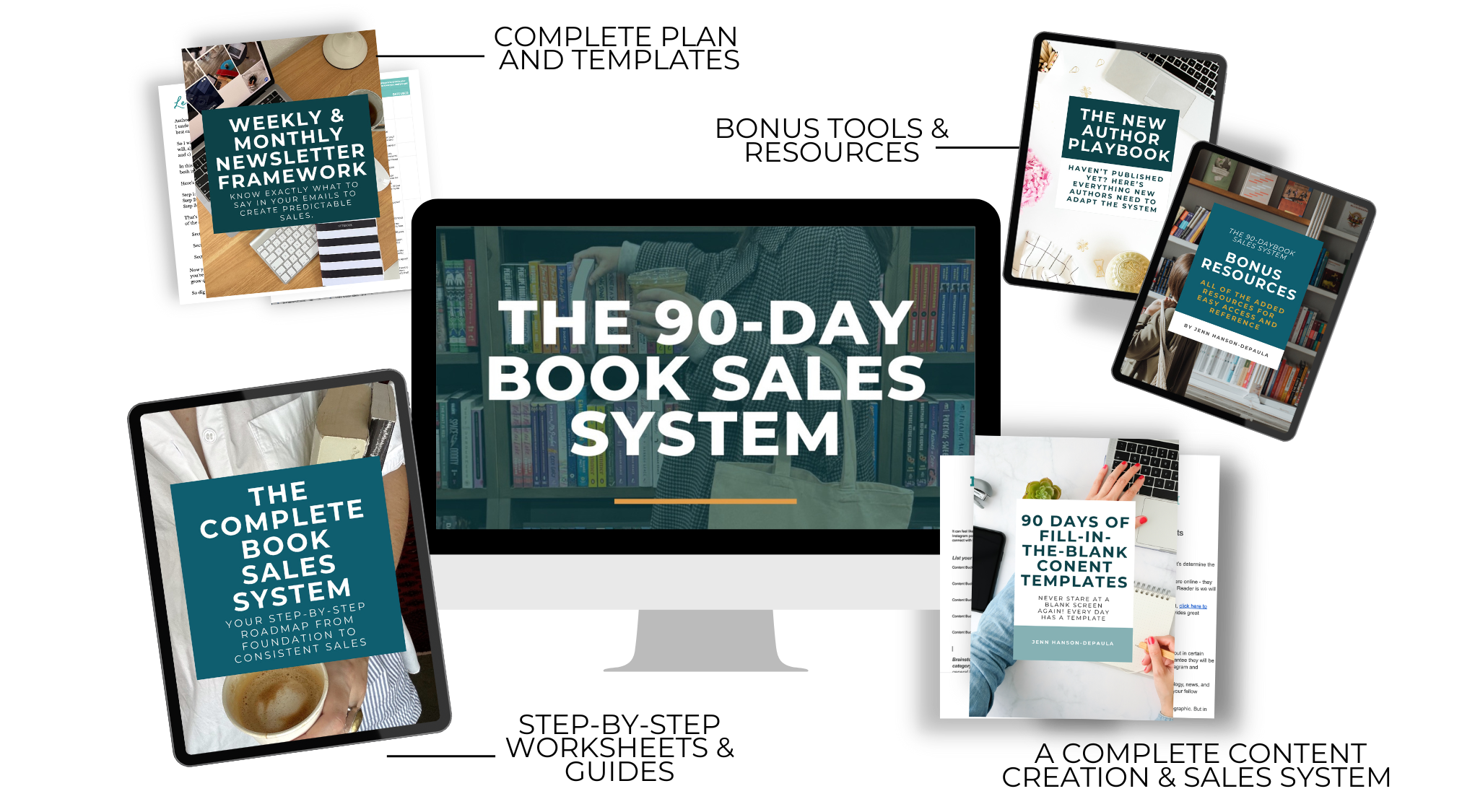
The 90-Day Book Sales System includes a New Author Marketing Playbook built specifically for pre-published authors, walking you through exactly what to create in each of the three phases. What to post during the Attraction Phase. How to build your list while the manuscript is still in progress. How to set up your promotional window so you are opening doors for people who have been waiting.You can find it here.
And if you want to start by understanding exactly which pieces of your foundation are missing, the free Book Marketing Blueprint is the fastest place to begin.
Your launch day is coming. The question is whether you will arrive as a stranger or as someone your readers have been waiting for.